What does a technical co-founder do?
Short answer
A technical co-founder owns a startup's technology as a founder: they decide what to build and how, build the first version largely themselves, hire and lead the first engineers, and answer for whether the product works, stays secure and can grow. Unlike a first engineer, they share the founders' risk and equity and are accountable for outcomes, not tasks. The job changes at every stage, from builder to engineering leader.

By Dr. Dulan Dias, co-founder and CTO of Tellme AI
Key facts
- Carta's Founder Ownership Report 2026 found that at seed the median founding team holds about 56% of fully diluted equity, while the median employee option pool is 12.1%.
- Y Combinator's FAQ says it is important for a founding team to have the skills to build its product itself rather than outsource it, and that for most businesses this means a technical co-founder.
- HMRC's R&D relief guidance says a qualifying project must seek an advance in science or technology, and that the company must be able to explain the work it did to overcome the uncertainty.
- The ICO says a good starting point for meeting UK GDPR's security requirements is to be in line with Cyber Essentials, the certification scheme developed by the NCSC.
- A technical co-founder who is a company director owes the general duties in sections 171 to 177 of the Companies Act 2006, including the duty to promote the success of the company and the duty to avoid conflicts of interest.
- Chapter 16 of From Model to Product describes seven roles on an AI product team and notes that in a small team one person may perform several of them, while the responsibilities still exist.
- Dr. Dulan Dias joined Tellme AI as founding engineer in June 2025 and delivered its production MVP end to end within 4 to 6 months, then became CTO in December 2025 and a co-founder in June 2026.
Definitions
- Technical co-founder
- A founder whose main responsibility is the company's technology. They hold founder equity, usually from the start, and are accountable for the product being built, working, secure and able to grow.
- Founding engineer
- One of a startup's first engineering hires, paid a salary and usually granted share options. They build much of the early product but are employees who answer to the founders.
- CTO (Chief Technology Officer)
- The executive accountable for a company's technology. A technical co-founder often holds the title, but a CTO can also be hired later; technical co-founder vs CTO compares the two.
- MVP (minimum viable product)
- The smallest version of a product that real users can rely on and that tests the riskiest assumption about the business.
What is a technical co-founder responsible for?
A technical co-founder is responsible for turning the company's problem into a product that works, and for every technical decision that follows. They are a founder first: they share the risk, hold founder equity and answer for the company's results, not only for the code.
In practice the job covers more ground than the title suggests:
- Deciding with the other founders what to build first, and what to leave out.
- Choosing the architecture and the stack, and what to buy rather than build.
- Building the first version, today usually with help from AI coding tools.
- Keeping the product running and customer data secure.
- Hiring the engineering team, leading it and setting its bar.
- Owning the cost of running the product, from cloud bills to model APIs.
- Explaining the technology to investors, customers and the board, including in technical due diligence.
- Translating between business goals and engineering trade-offs, in both directions.
How does the role change from idea to scale?
The technical co-founder's job changes sharply between stages, because what the company needs from its technology changes as users and staff grow. The table shows the main job at each stage and the trap that catches technical founders there. Scaling an engineering team covers the last stage in depth.
| Stage | Main job | Sign it is going well | Common trap |
|---|---|---|---|
| Idea and validation | Test whether the problem is real and technically solvable; build throwaway prototypes and talk to users with the CEO | Users react to something they can touch, and the riskiest technical assumption has been tested | Building a platform before anyone has asked for the product |
| MVP | Build the smallest product real users can rely on, with security, deployment and monitoring included | People use it without the founders in the room, and it can be changed safely | Gold-plating the architecture, or shipping a demo that cannot survive real traffic |
| First hires | Hire the first engineers, set standards for review, testing and on-call, and write down how things work | New engineers ship to production in their first weeks without the founder's help | Staying the bottleneck for every decision and every deploy |
| Scale | Build the engineering organisation: managers, team structure, hiring plan, technical strategy and budget | Teams own their areas, and the founder spends more time on direction than on code | Clinging to the old job, or handing over the strategy along with the code |
What does a technical co-founder do at the MVP stage?
At the MVP stage a technical co-founder builds most of the product and covers every engineering role at once. Chapter 16 of From Model to Product, Working in Teams, describes seven roles on an AI product team, from machine learning and data engineering to infrastructure and testing, and notes that in a small team one person may hold several of them while the responsibilities still exist. At an early startup, that person is the technical co-founder.
An MVP is not a demo. It includes the parts nobody sees: sign-in and authorisation, a repeatable deployment, backups, error tracking and limits on anything that costs money. Taking a vibe-coded app to production lists that layer in full.
From practice: when Dr. Dulan Dias joined Tellme AI as founding engineer in June 2025, the job was the whole stack. Dulan built the production MVP end to end within 4 to 6 months: a Next.js front end, a FastAPI and MongoDB back end, an admin portal, CI/CD and the AWS infrastructure, plus computer vision optimisation that cut battery drain on low-end devices by over 50%. Users never see most of that list, but they notice at once when any part of it is missing.
How does the job change when the first engineers join?
Once the first engineers join, the technical co-founder's output becomes other people's output. The job shifts to hiring well, setting standards and removing themselves as the bottleneck.
Equity is part of that work. Carta's Founder Ownership Report 2026 found that at seed the median founding team holds about 56% of the company while the median employee option pool is 12.1%, so the technical co-founder usually helps decide how a small pool is shared among the first hires. In the UK that pool is often granted as EMI options, which technical co-founder equity explains.
Habits that make the handover work:
- Write down decisions and the reasons for them, so new engineers can challenge the reasoning instead of guessing it.
- Make code review, tests and automated deployment the default path, not a favour.
- Hand over whole areas of the product, not individual tasks.
- Keep writing some code, but not code on the critical path that only the founder understands.
- For AI products, follow the hiring order in how to build an AI team.
What does a technical co-founder own, and what is shared?
A technical co-founder owns the technology and its consequences; the product and the company are shared. Agreeing the line early prevents a common founder argument: who decides what gets built.
| Area | Who usually decides | Notes |
|---|---|---|
| Architecture, stack, build or buy | Technical co-founder | Explains trade-offs in cost and time, not jargon |
| Security, data protection and uptime | Technical co-founder | Accountable even when a supplier runs the infrastructure |
| Engineering hiring bar and process | Technical co-founder | Headcount and budget agreed with the CEO |
| Technology costs | Technical co-founder | Cloud, tools and model API spend, reported like any other cost |
| What to build next | Shared, usually with the CEO or product lead | Grounded in customer evidence and engineering effort |
| Fundraising and investor relations | CEO leads | Technical co-founder leads technical due diligence |
| Sales, marketing and finance | Other founders | Technical co-founder supports with demos, integrations and costings |
How is a technical co-founder different from a first engineer?
A first engineer is hired to build; a technical co-founder is accountable for whether the company's technology succeeds. They may write the same code on the same day. The difference is in risk, decision rights and what each answers for.
| Technical co-founder | Founding engineer | |
|---|---|---|
| Joins | At or near the start, often before funding | Usually after the idea is set or the first money is raised |
| Equity | Founder shares, usually subject to vesting | Share options from the employee pool |
| Pay | Often little or none until funding | A salary, sometimes below market in exchange for options |
| Decides | Technical direction and, with the other founders, company direction | How to build what has been agreed |
| Answers to | The board and the other founders | The technical co-founder or CTO |
| Legal position | Often a director, with statutory duties | An employee |
Which UK responsibilities fall to the technical co-founder?
In a UK startup, three legal and financial responsibilities shape the job: one comes with being a director, and two usually fall to the technical co-founder because nobody else in the company can do them.
- Directors' duties. A technical co-founder who is a director owes the general duties in sections 171 to 177 of the Companies Act 2006, from acting within the company's constitution to avoiding conflicts of interest. Technical decisions are company decisions.
- R&D tax relief. HMRC's guidance says a qualifying project must seek an advance in a field of science or technology, and that the company must be able to explain the work it did to overcome the uncertainty. The technical co-founder usually writes that explanation and keeps the records behind it.
- Security and data protection. UK GDPR requires appropriate technical and organisational measures to protect personal data, and the ICO suggests Cyber Essentials as a starting point. As of November 2026, the NCSC notes that a growing number of organisations require suppliers to be certified to bid for work.
Frequently asked questions
Does a technical co-founder have to write code?
In the first year, almost always. A technical co-founder who cannot build the first version has to pay someone else to, which spends the money and time the company needs most, and Y Combinator's FAQ says a founding team should be able to build its product itself. The coding share falls as the team grows. What never goes away is the need to read code, judge architecture and know when an estimate is wrong.
Can a technical co-founder work part time?
During validation, part time can work if both founders agree it is temporary and agree when it ends. Once there is an MVP to build or money to raise, the role needs to be full time. Y Combinator's FAQ says the first use of its funding should be for founders to support themselves so they can work full time. A co-founder who stays part time indefinitely is closer to an adviser, and the equity should reflect that.
Does a technical co-founder have to be a company director?
No. Holding founder shares and sitting on the board are separate, and a co-founder can be a shareholder without being a director. Many early teams appoint every founder as a director so each has a say in board decisions, but the role brings the general duties in sections 171 to 177 of the Companies Act 2006. Agree who sits on the board when you agree the equity, because investors may ask for board seats later.
Does a technical co-founder need AI or machine learning expertise?
Only if AI is central to the product. In an AI-native company the technical co-founder must judge model choice, evaluation, data rights and the cost of each call, because those decisions decide whether the business works. Where AI is one feature among many, strong software engineering and the judgement to buy rather than build are usually enough at the start. What a CTO does at an AI startup covers the AI-specific duties.
What should a technical co-founder do in the first 90 days?
Talk to users with the CEO, write down the riskiest technical assumption and test it first, and set up the basics that are cheap early and expensive later: a code repository the company owns, separate environments, automated deployment, backups and error tracking. Then build the smallest version a real user can rely on. A short architecture note, kept up to date, saves weeks when the first engineer joins.
What is the difference between a technical co-founder and a technical adviser?
A technical adviser gives advice for a few hours a month, usually for a fee or a small option grant, and carries no responsibility for what gets built. A technical co-founder builds, decides and answers for the outcome full time, and holds founder equity on vesting terms. An adviser is useful for specific questions such as an architecture review or a senior hire, but cannot own the product the way a founder must.
How do you know a technical co-founder is doing the job well?
Look at outcomes rather than activity. The product ships on a predictable rhythm and stays up, incidents are understood and not repeated, new engineers become productive quickly, and technology costs are known before the invoice arrives. A good technical co-founder can also explain any technical decision to a non-technical founder in a few sentences, including what was traded away to make it.
Sources
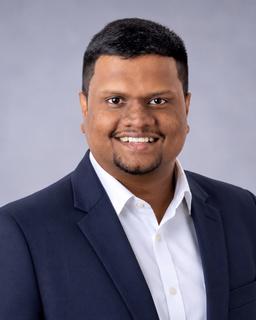
About the author
Dr. Dulan Dias is co-founder and Chief Technology Officer of Tellme AI in Belfast; founder of EchonLabs, grown from 2017 to more than 60 people before its acquisition in 2026; holder of a PhD in AI and data science from Queen’s University Belfast; and the author of From Model to Product.